



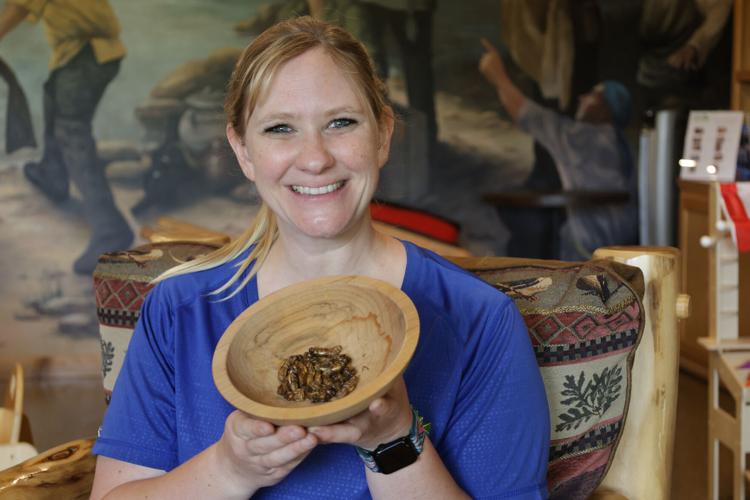
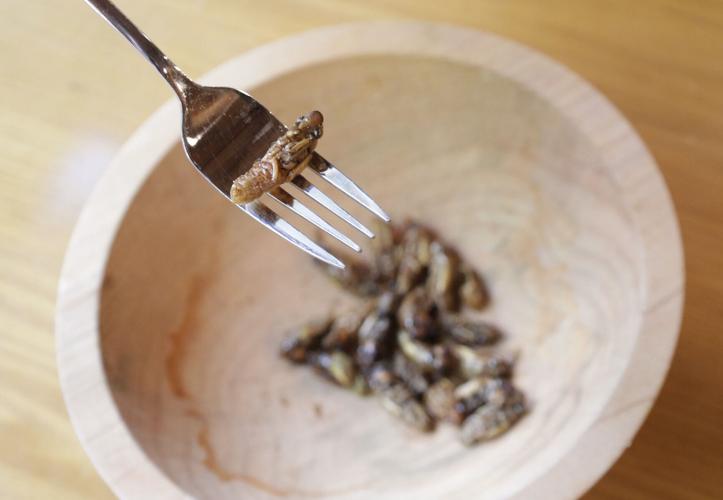


Suzy Lyttle, of the Forest Preserve District of Will County, eats cicadas while discussing their sustainable and nutritional benefits.
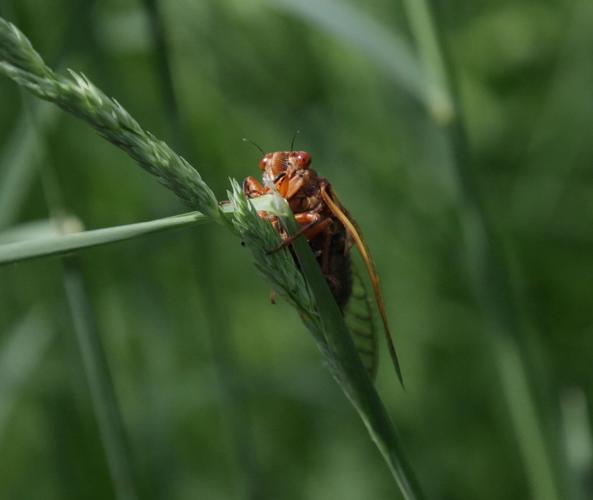
Cicadas are all the buzz but instead of panicking consider this: The 17-year cicada invasion is good news for the culinarily adventurous looking for a good protein source.
In other words, don’t fight them, eat them.
In a paper she co-authored for the March 2022 Annual Review of Food Science and Technology titled “Insects as an Alternative Protein Source,” Andrea M. Liceaga, Ph.D. and an associate professor in the Protein Chemistry & Bioactive Peptides Lab at Purdue University’s Department of Food Science , noted that cicadas are 48.3% protein and 12.4% fiber.
Liceaga is big on bugs as a food source.
“There are over 500 species of insects consumed in Mexico alone,” says Liceaga, noting that bugs are healthy, packing more protein per ounce than the animals we typically consume. For example, salmon is 22.2% protein; chicken, 22.2%; and beef, 22.5%.
People are also reading…
Not just cicadas but other insects are edible. Think chapulines (grasshoppers) seasoned with salt and lime, crickets and mealworms dipped in chocolate and Oaxaca Brownies made with cricket flour.
Kristal Twardy, registered dietitian at Franciscan Wellcare, cautions about insecticides, allergies and other potential problems eating cicadas and other bugs.
“That may be the foods of our future," Kristal Twardy, a registered dietitian and health coach at Franciscan Wellcare, says of entomophagy, the scientific term for eating bugs, a popular food in many parts of the world.
Twardy points out that according to the United Nations Food and Agriculture Organization, approximately 2 billion people around the world supplement their diets with insects.
“Eating insects is common in Europe,” says Liceaga, who grew up in Mexico City. When she returns home, she frequently visits markets specializing in insect-based foods. “There’s a restaurant in London that serves mostly insects.”
She’s referring to Yum Bug, which offers such dishes as Cheese & Ale Crickettes, Cricket Mince and the gluten-free Purple Sprouting Broccoli, Cricket & Wild Garlic Pesto. It even serves cricket beer.
“Insects can be a good source of protein, vitamin B12, iron, zinc, fiber, essential amino acids, omega-3 and omega-6 fatty acids and antioxidants,” says Twardy. “Grasshoppers are one of the most antioxidant-rich insects.”
Desensitizing people to eating bugs can increase consumption.
In her lab, Liceaga milled crickets turning them into a high-protein flour used to make a much healthier brownie. That’s because wheat flour is much less nutrient-dense than cricket flour.
According to a study in the Journal of Insect Science, published in October 2020 and titled “University Student Perspectives of Entomophagy: Positive Attitudes Lead to Observability and Education Opportunities,” students displayed a taste preference for cricket flour brownies but could not consistently differentiate between those made from cricket or wheat flour.
From a sustainability aspect, insect ingestion can save the world.
People who consume bugs use fewer resources, says Suzy Lyttle, program coordinator at Hidden Oaks Nature Center in Bolingbrook.
“Bugs are not only nutritious and plentiful but they also provide a sustainable protein source,” she continues. “They use less water and less land and raising them for food doesn’t require using pesticides, which get into the water table and run off into lakes and streams. And because of their short life cycle, you don’t have to wait long for them to be edible.”
They also emit less greenhouse gas into the environment.
Learning to cook with bugs isn’t difficult, says Liceaga. A Google search for bug recipes turns up more titles than might be expected including "The Cicada Cookbook," "Bugs for Breakfast" and "The Insect Cookbook: Food for a Sustainable Planet."
Farmed insects are readily available from online sites such as Walmart, which advertises that Erbies Edible Bugs Mixed Trail Mix consisting of seasoned and crunchy crickets, grasshoppers, silkworm pupae and Sago Worms. Amazon sells quarter-pound bags of dehydrated flying termites and four-packs of apple, banana, blueberry and strawberry scorpion lollipops.
According to Cindy Cain, public information officer for the Forest Preserve District of Will County, the Plum Creek Nature Center in Crete Township sells chocolate-covered mealworms and crickets at its gift shop.
In the past, Lyttle has conducted the Eat a Bug Challenge, a drop-in program where people could taste test insects including crickets in a barbecue sauce (think BBQ potato chips in taste and mouth feel) or chocolate powder and mealworms seasoned with salt and pepper. Participants receive “I Ate a Bug” stickers.
“I read that the hardest part is eating your first bug,” says Lyttle who says she prefers mealworms to crickets. “Once you get over that, it becomes easy.”
There are a few other things to consider before adding insects to your diet.
According to Twardy, those with seafood allergies should avoid insects such as cicadas. Related to lobsters and shrimp, their exoskeletons are made of chitin, which can cause an allergic reaction.
Twardy also notes that insects exposed to bacteria, parasites, viruses, fungi or pesticides can make us ill, so proper cleaning and preparation are essential. Hard body parts can be a choking hazard, she adds, so you might want to stick to cicadas that have just emerged from their shells before they harden.


