




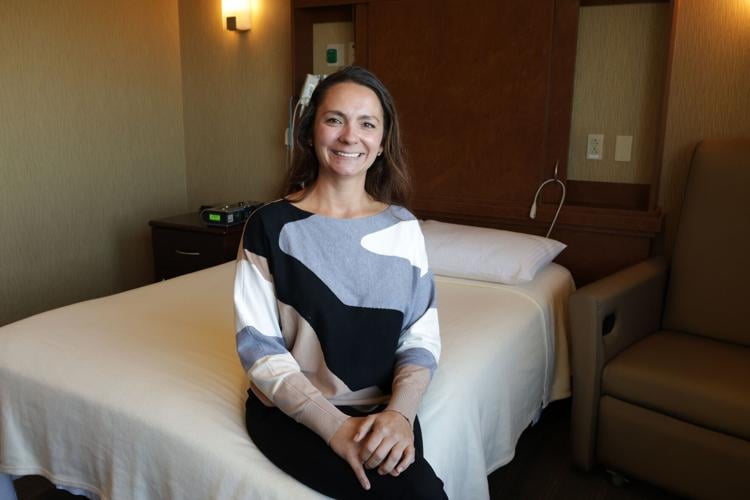
Dr. Richard Czuma, a sleep medicine specialist at Northwestern Medicine, explains how Central Standard Time aligns better with our biological clocks as we fall back.
For many people, “falling back” means an extra hour of sleep on a Sunday morning, but that seemingly simple clock change can have a much bigger effect on daily lives than many realize.
As the clocks move back an hour – returning to standard time – sunrise and sunset come earlier in the Region, meaning mornings get brighter while darkness arrives sooner in the evening.
“Sleep quality can actually worsen despite the extra hour in certain populations,” said Dr. Emily Switzer, a Franciscan Physician Network pediatrician in Dyer. “In a Canadian study, the time change has been found to be associated with more sleep dissatisfaction, harder time falling asleep, harder time staying asleep and feeling more tired during the day one week afterward.”
Yet experts say the fall change appears to be less physically disruptive than the spring change, when residents lose an hour of sleep in turning their clocks forward for Daylight Saving Time.
People are also reading…
“Some studies have even found slightly more sleep and fewer short-term accidents after the fall transition,” said Heather Plinovich, a clinical psychologist and owner of Anxiety & OCD Behavioral Health Center in Schererville and Chesterton. “Still, earlier darkness can affect driving visibility, outdoor activity and daily routines.”
But for those who would prefer to avoid the twice-yearly disruption, the way Americans keep time could be changing.
Though the U.S. House of Representatives passed the Sunshine Protection Act in July, which would make Daylight Saving Time permanent year-round, clocks are still scheduled to “fall back” on Nov. 1 because the legislation still needs Senate approval.
Making DST permanent would keep the nation’s clock one hour ahead of standard time, giving people more daylight in the evening throughout the year but later sunrises during the winter months.
Dr. Richard Czuma, a board-certified psychiatrist and sleep medicine specialist affiliated with Northwestern Medicine Palos Hospital, says research suggests adopting permanent standard time would be healthier since it better aligns with human circadian biology.
“The evidence supports the distinct benefits of standard time for health and safety, while also highlighting the potential harms that result from seasonal time changes to and from Daylight Saving Time,” he said.
Advocates of making DST permanent say additional evening daylight hours can offer economic benefits, allow more time for outdoor activities and possibly help fight winter depression.
However, in Northwest Indiana, that could mean the sun doesn’t rise until well after 8 a.m. in winter.
While eliminating a biannual switch could offer some public health benefits, Switzer says timing matters.
“A suboptimal choice – permanent DST – captures much less of the available benefit and, some argue, could introduce chronic misalignment harms that partly offset the gains from ending the switch,” she said.
The biggest effect
Regardless of what happens with the legislation, the clocks are will move back one hour Nov. 1. While Switzer says younger and older adults are more vulnerable to the effects of the time change, the single strongest predictor of who will suffer the most depends on the person’s internal clock. In this case, it’s “night owls,” she says.
“Night owls have a longer intrinsic circadian period and re-adjust more slowly,” Switzer said.
People who have insomnia or other mental health conditions may feel the effects more strongly as well, since sleep and mood influence each other, Plinovich says.
“The research on depression after the fall change is mixed, but one large Danish study found an increase in depressive episodes following the transition,” she said.
While changing the clock by just one hour may seem minor, it acts as an abrupt “glitch” to the body’s internal clock, explains Kellie Mancilla, a clinical sleep navigator at Powers Health.
“For vulnerable individuals, this single hour is more than enough to trigger or worsen symptoms of anxiety, depresion and sleep disorders,” she said.
Time change is a semiannual adjustment in sleeping patterns that shouldn’t be ignored, Czuma says.
“Shifts in daylight exposure and sleep timing can worsen mood and mental health by causing circadian misalignment – a sleep-wake schedule that is out of sync with our internal circadian rhythms – and by increasing sleep loss, both of which can impair emotional and social functioning and worsen any underlying struggles with sleep or mental health conditions,” he said.
Though changing the clocks can affect other pre-existing conditions, Plinovich says there’s an important distinction between this and seasonal affective disorder.
“Seasonal affective disorder is a recurring form of depression, not simply feeling tired or gloomy for a few days,” she said. “I become more concerned when a low mood or loss of interest lasts about two weeks, interferes with functioning or returns in a clear seasonal pattern.”
The news isn’t all bad, however.
“Unlike the ‘spring ahead’ shift, which sees a spike in cardiac events, studies show transitioning to standard time is associated with a short-term reduction in heart attacks and traffic accidents as drivers adjust to an extra hour of rest,” Mancilla said.
Time change tips
Light is by far the most powerful lever for re-adjusting the circadian clock, Switzer says, and its timing determines the direction of the shift.
“For the November fall back change specifically, that means seeking bright light in the late afternoon/evening – not just the morning,” she said.
In the week leading up to the switch standard time, Czuma suggests gradually making changes to your sleep window by going to bed and waking up about 15 minutes later each day.
Though it may feel nice to have the extra hour as a reason to stay up much later, Plinovich advises against it. And though she says there’s no perfect option for every region, she advises lawmakers to weigh dark winter mornings, evening visibility, school and work start times, commuting patterns and where communities sit within a time zone.
“A policy that works reasonably well in one part of the country may create very different sunrise and sunset times somewhere else,” she said.
Mancilla says it’s also critical to establish proactive mental health support and to keep in mind time change effects can vary by person.
“Some experts say our bodies should adjust within two to three days of a time change, but I talk to people every day who report it takes them much longer to adjust,” she said. “Each person is different.”


