




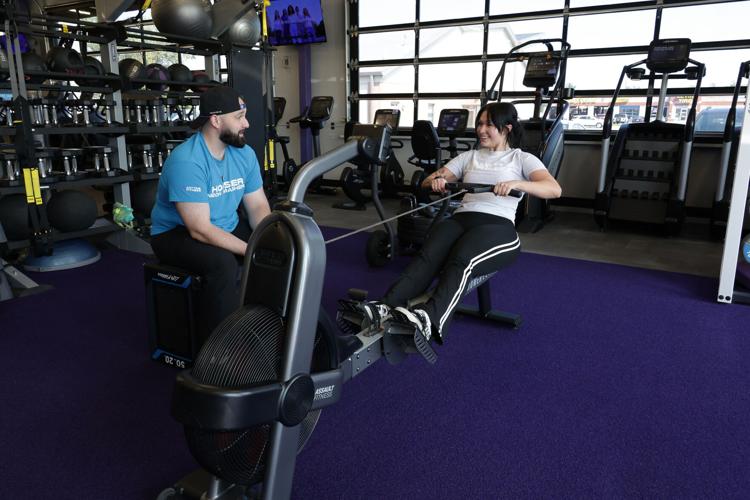

Eric White, regional coach at Anytime Fitness, talks about Zone 2 cardio to achieve 60-70% of maximum heart rate.
Zone 2 cardio.
It’s a recent buzzphrase in the fitness world. It stems from the formula connected to your heart rate during an activity. There are five heart rate zones that indicate how hard your heart is working to pump blood, according to clevelandclinic.com.
Heart rate zones are ranked 1 to 5. Each zone is based on a percentage of your maximum heart rate during exercise, or the highest number of times your heart can beat in 60 seconds.
The zones range from a low intensity level at zone 1 with 50-60% of max heart rate to a very high intensity of 90-100% of max heart rate for zone 5. Zone 2 is a moderate intensity of 60-70% of your max heart rate.
“Zone 2 cardio is basically steady cardio where you’re working, but you’re not completely out of breath,” said Eric White, a regional coach for eight Anytime Fitness locations in Northwest Indiana. “Your heart rate is elevated; you’re breathing a little heavier, but you should still be able to have a conversation. It’s a really good intensity for building your cardiovascular fitness without having to go all out every workout.
People are also reading…
“Generally, Zone 2 is somewhere around 60-70% of your estimated maximum heart rate. I wouldn’t get too caught up in the exact number though because everyone is a little different,” White said. “The easiest way to think about it is you’re working at a pace you could maintain for a while and still talk without gasping for air.”
White adds that paying attention to cardio zones is important for overall fitness and health. “Cardio is important for way more than just burning calories. It helps improve your heart and lung health, your endurance, recovery and overall quality of life. It also makes everyday activities feel easier when your cardiovascular fitness improves,” said White.
Hitting Zone 2
“There are a lot of ways to do it,” said White. “Brisk walking, incline treadmill walking, biking, elliptical, rowing, swimming, hiking or even a light jog can all work. It really depends on the person. What puts one person in Zone 2 may be completely different for somebody else.”
When determining Zone 2 needs, White says there’s not one amount for everyone.
“I like 30-60 minutes for most people who are already exercising regularly, but even 20 minutes is a great starting point. The bigger goal is being consistent with it throughout the week.”
Keep it simple
Monitoring your cardio zone is easy thanks to a variety of fitness trackers including watches and corresponding apps that let you know what zone you’re in and process reports for you.
White suggested MyZone as a “fantastic way to track this.” He said these heart rate monitors show your heart rate and intensity level in real time while you are working out. Apple Watch, he noted is also another easy option that you can pair with the Workout App.
“The biggest thing I’d say is people don’t need to overcomplicate it,” said White. “Not every cardio workout needs to be brutal. There’s definitely a time and place for high-intensity training, but you can get a lot of benefit from just being consistent with steady, moderate-intensity work.”


