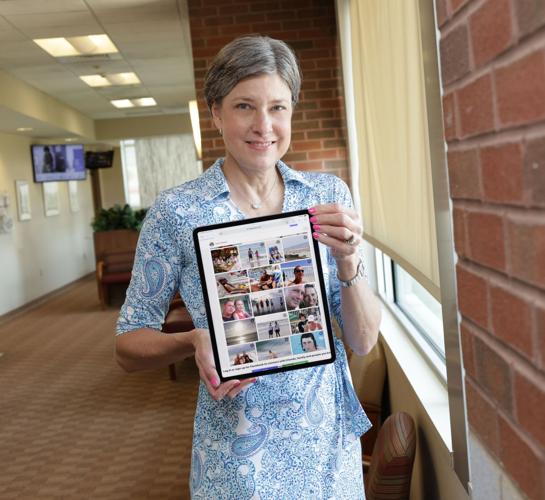
Deanna Ramirez, a licensed social worker and mental health therapist with New Leaf Resources, notes the influences of social media on children.
Tony V. Martin, The Times
Jorie Moberley a nurse practitioner with Franciscan Health, uses children's checkups as an opportunity to discuss internet safety, social media, sleep and screen time.
Jorie Moberley, a pediatric nurse practitioner at Franciscan Physician Network. warns that social media can strip a child of traditional development activities such as socialization and being out in nature and offers tips to keep them safe on electronic devices.
Deanna Ramirez, a licensed social worker and mental health therapist with New Leaf Resources, tells parents what to look for to determine whether their children are being cyberbullied or consuming inappropriate materials on social media.
Social media has changed the complexion of bullying, experts say.
“Before the advent of social media, bullying was largely confined to the playground or hallways of the school,” said Jorie Moberley, a nurse practitioner with Franciscan Health. “Now bullies have access to their victims 24 hours a day, seven days a week.”
No longer limited by geography, bullies can access children through social media from anywhere in the world, she says.
“Certainly it’s not unusual for kids to say mean things or make fun of each other, but technology and social media have significantly magnified the problem,” Moberley said.
Deanna Ramirez, a licensed social worker and mental health therapist with New Leaf Resources, says some common signs of cyberbullying include unexplained decline in grades, withdrawing from family and friends, deleting social media accounts, losing interest in social events or becoming upset or angry when using the phone.
Moberley says another indication of cyberbullying is if children hide their device when others are near or they avoid discussing what they are doing on the device.
Social media addiction
Excessive social media use can disrupt physical activity and adequate sleep in youth, but some research suggests it can also trigger pathways similar to addiction by overstimulating the reward center in the brain, says Jorie Moberley, a nurse practitioner with Franciscan Health.
If parents answer “yes” to any of the following questions, it may indicate that a child is addicted to electronic devices, she says.
Does your child get upset when you ask them to stop their screen activity?
Does your child keep asking you to buy a digital device such as an iPad after you’ve said no?
Does your child keep asking to play a video game or other electronic device after you’ve said no?
Would your child rather play video games than go outside and play with friends?
Does your child enjoy anything that doesn’t involve screens?
If you restrict all screen use for one day, would your child be irritable and whiny?
Jorie Moberley a nurse practitioner with Franciscan Health, uses children's checkups as an opportunity to discuss internet safety, social media, sleep and screen time.