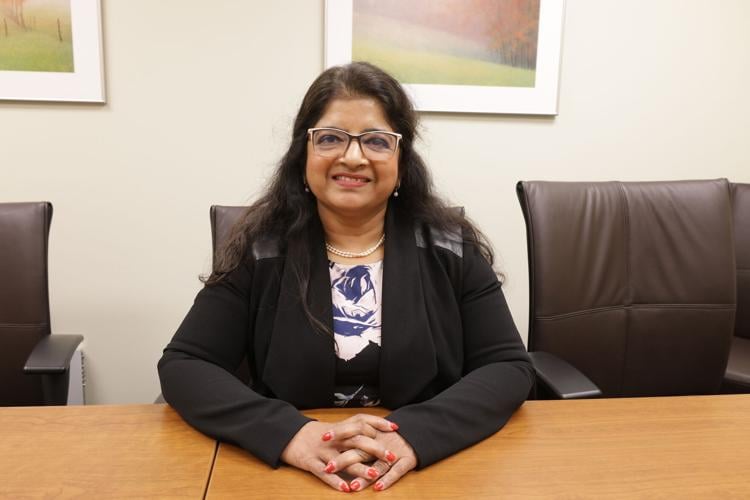
Whitney Lee, co-owner and pharmacy manager at Tinley Park Apothecary, says communication on medications is crucial when your doctors or pharmacists are not in the same network.
Tony V. Martin, The Times
To help seniors keep track of various medications, Dr. Rajarajeswari Majety, medical director with the Franciscan PACE program, recommends a weekday planner.
Tony V. Martin, The Times
New subscriber benefit!
Copied to clipboard
Out of gifts for the month
Unfortunately you've used all of your gifts this month. Your counter will reset on the first day of next month.
Dr. Rajarajeswari Majety, medical director with the Franciscan PACE program. notes that it's important to bring all prescription and over-the-counter medications to all doctor's appointments to prevent adverse drug interactions
Dr. Rajarajeswari Majety, medical director with Franciscan PACE; Whitney Lee, co-owner and pharmacy manager at Tinley Park Apothecary; and Nathan Damasius, pharmacist and owner of Vyto’s Pharmacy, offer these tips for managing multiple medications:
Set reminders by using phone alerts or placing sticky notes in commonly used areas.
Fill prescriptions at the same pharmacy or within the same network of pharmacies.
Always bring updated medication lists or the medications to medical appointments.
Don’t forget to bring over-the-counter drugs, including vitamins or supplements, you regularly take to appointments.
Routinely review medication lists with your health-care team to ensure there are no drug interactions.
Ask your pharmacy about pill packs or use pill boxes to help stay organized.
Ask your doctor or pharmacist about any concerns or questions you have about taking your medications.
Whitney Lee, co-owner and pharmacy manager at Tinley Park Apothecary, says communication on medications is crucial when your doctors or pharmacists are not in the same network.
To help seniors keep track of various medications, Dr. Rajarajeswari Majety, medical director with the Franciscan PACE program, recommends a weekday planner.