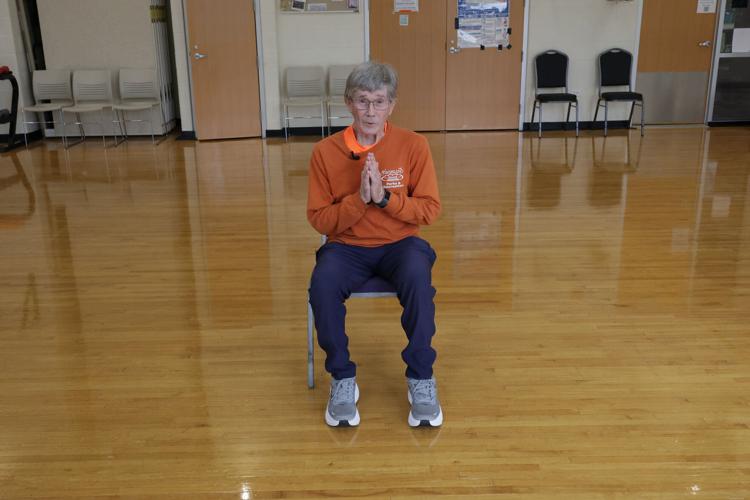
John Bobalik, a personal trainer and Silver Sneakers instructor with the Highland Parks & Recreation Department, demonstrates a seated spinal twist. Step 1: Sit straight with your feet shoulder-width apart on the floor.
Tony V. Martin, The Times
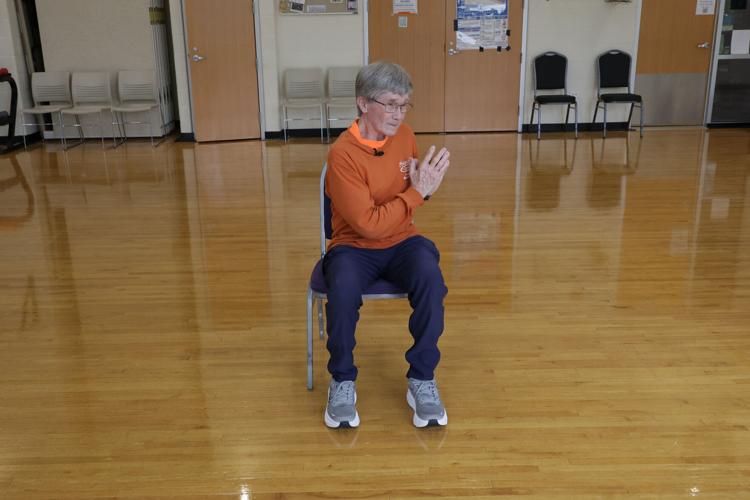
Step 2: Slowly rotate your upper body to one side while holding onto the opposite side of the chair for support. Hold for 10-15 seconds.
Tony V. Martin, The Times
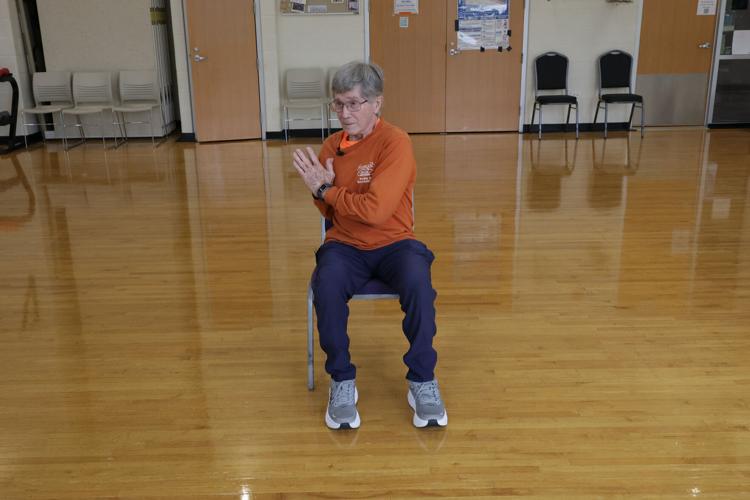
Step 3: Rotate to the other side and hold for 10-15 seconds.
Tony V. Martin, The Times
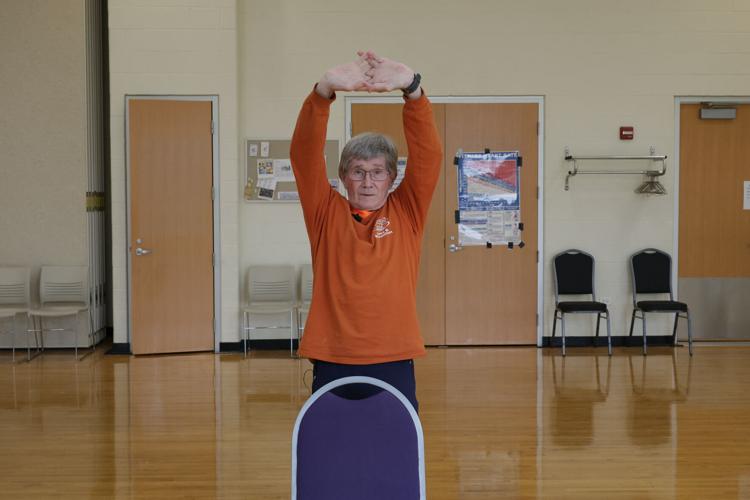
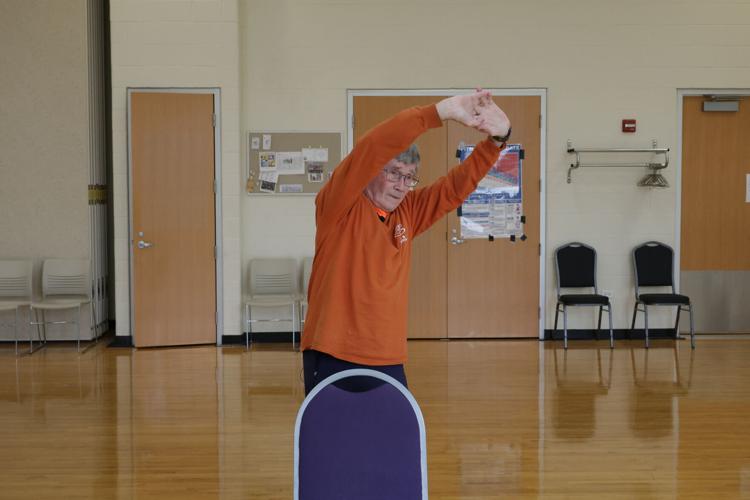
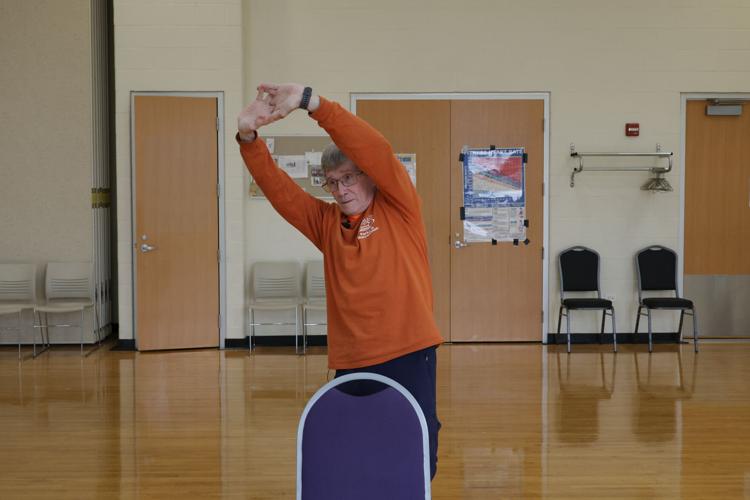
Trainer John Bobalik demonstrates an arm and shoulder stretch. Step 1: Sit in a chair or stand up. Interlock your fingers, raise both hands above your head and reach for the ceiling for 10 seconds.
Tony V. Martin, The Times
Step 2: Lean to the left and hold that position for 10 seconds.
Tony V. Martin, The Times
Step 3: Lean to the right and hold that position for 10 seconds.
Tony V. Martin, The Times
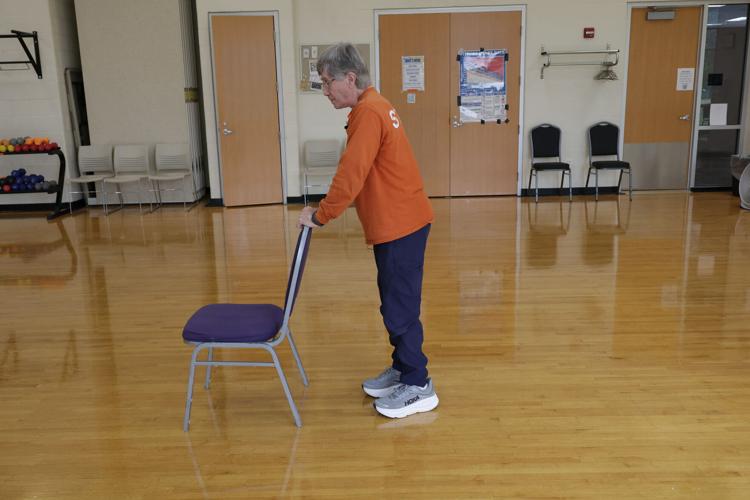
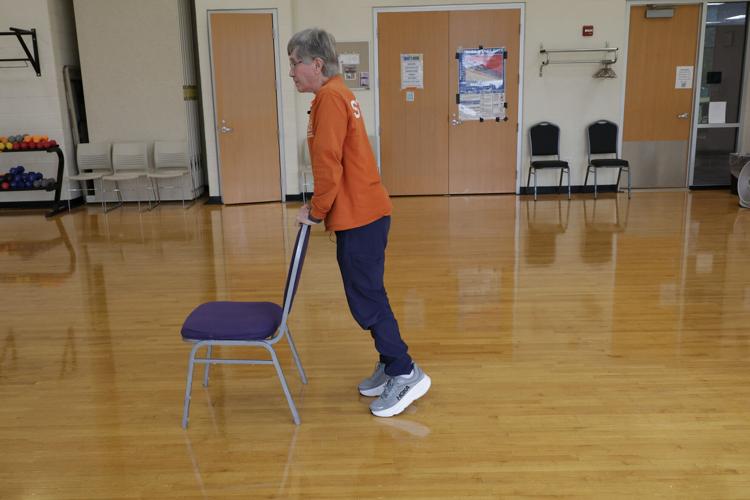
John Bobalik shows the standing calf stretch. Step 1: Stand facing a wall and place your hands shoulder-width apart at eye level. Place one foot in back and keep your heel flat on the floor and your back leg straight. Bend your front knee slightly and press your hips forward until you feel a stretch in your back lower leg.
Tony V. Martin, The Times
Step 2: Switch legs and hold for another 10 seconds.
Tony V. Martin, The Times
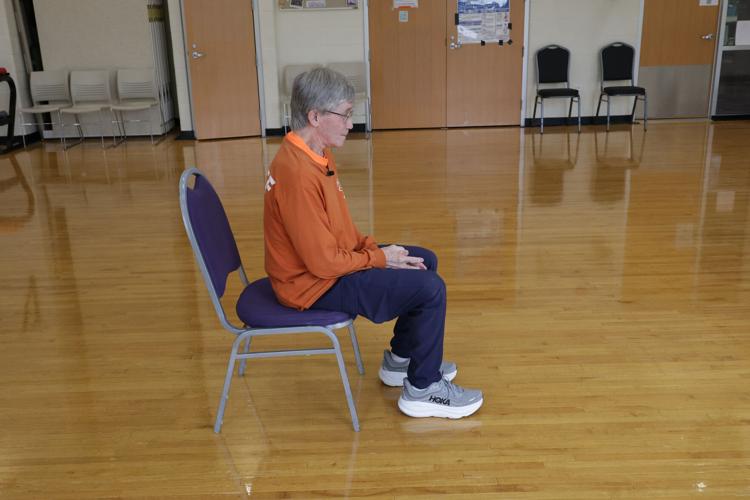
Senior Lifestyle October 2026 Range of Motion John Bobalik demonstrates the seated hamstring stretch. Step 1: Sit on the edge of a sturdy chair.
Tony V. Martin, The Times
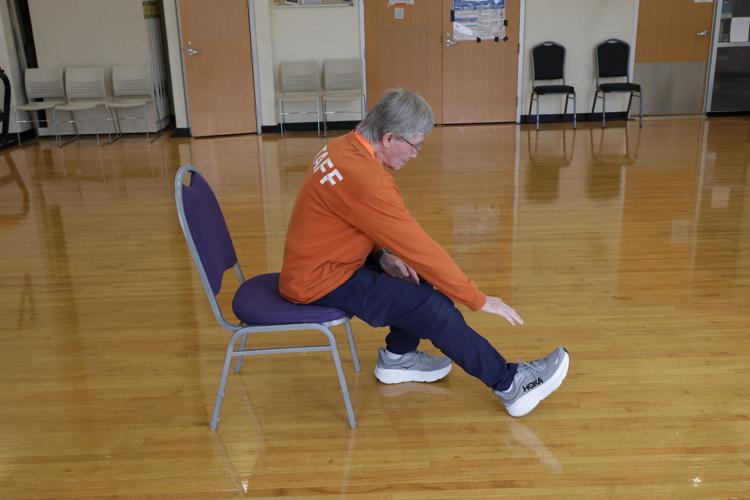
Step 2: Extend one leg straight out with your heel on the floor. Keep your back straight.
Tony V. Martin, The Times
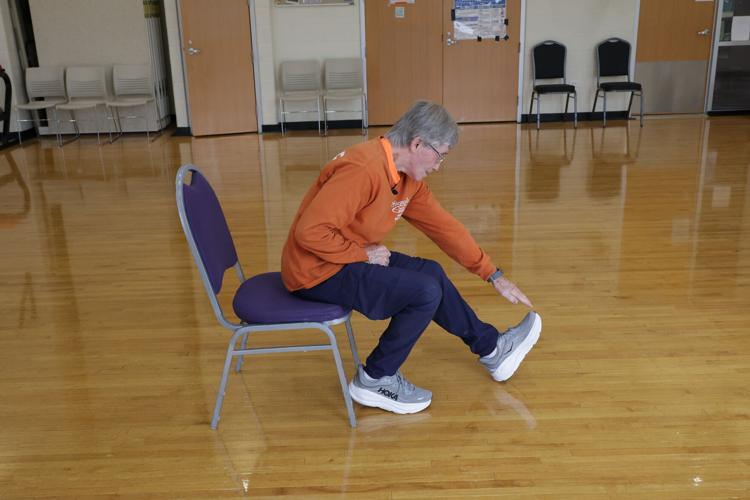
Step. 3: Keep your back straight and lean forward gently from the hips until you feel a light stretch on the hamstring muscles in the back of your thigh. Hold for 10 to 15 seconds, then switch legs.
Tony V. Martin, The Times
New subscriber benefit!
Copied to clipboard
Out of gifts for the month
Unfortunately you've used all of your gifts this month. Your counter will reset on the first day of next month.
Most older adults don’t need to read an article, see a commercial or chat with their physician to know one seemingly inevitable truth about aging: The older you get, the more uncomfortable it is to do everyday things.
Bending over to pick up this newspaper from the front porch. Standing up to walk into the kitchen. Reaching for a glass on that second shelf.
These are not activities that most people would put into the category of “strenuous.” Nevertheless, they’re exactly the kinds of things that start to seem a little more difficult as the years go by. Why? Because a combination of age and physical inactivity that comes with a more sedentary lifestyle can cause connective tissues go through physiological changes.
Muscles shrink in size and strength. Tendons and ligaments tighten. Joints become stiffer.
In short, your range of motion narrows, resulting in reduced mobility. And that can lead to a host of cascading issues, including loss of elasticity in the muscles, tendons and ligaments; increased joint stiffness; and a greater predisposition to injury. That’s why older adults need to take steps to maintain or improve their range of motion.
“The old saying ‘motion is lotion’ basically means that the more active you are, the easier it is to maintain your flexibility and range of motion,” says John Bobalik, a personal trainer and Silver Sneakers instructor with the Highland Parks & Recreation Department. “It works on the same use-it-or-lose-it principle that applies to maintaining muscle mass and strength. A physically inactive lifestyle and more sitting times contribute to the loss of muscle mass and strength, as well as the loss of flexibility and range of motion by reducing connective tissue elasticity and contributing to joint stiffness.”
The best way to combat that loss of flexibility and range of motion, then, is to maintain a more active lifestyle. For some older adults, that may mean committing to a regimen of range-of-motion exercises. But even outside of these specific stretches, just paying more attention to everyday activities and habits can help.
“Stay active and be intentional about getting some form of exercise every day,” advises Ashley Krolikowski, the active older adults coordinator at the Schererville Family YMCA. “Walking, stretching or taking an instructor-led class are all good examples of things that can help you maintain your flexibility and range of motion as you age.”
“I'm 78," said Diana Murray of Crown Point. "I've been offered opportunities to move to Florida, but I can't do it. I can't give up music. It …
John Bobalik, a personal trainer and Silver Sneakers instructor with the Highland Parks & Recreation Department, demonstrates a seated spinal twist. Step 1: Sit straight with your feet shoulder-width apart on the floor.
Trainer John Bobalik demonstrates an arm and shoulder stretch. Step 1: Sit in a chair or stand up. Interlock your fingers, raise both hands above your head and reach for the ceiling for 10 seconds.
John Bobalik shows the standing calf stretch. Step 1: Stand facing a wall and place your hands shoulder-width apart at eye level. Place one foot in back and keep your heel flat on the floor and your back leg straight. Bend your front knee slightly and press your hips forward until you feel a stretch in your back lower leg.
Step. 3: Keep your back straight and lean forward gently from the hips until you feel a light stretch on the hamstring muscles in the back of your thigh. Hold for 10 to 15 seconds, then switch legs.