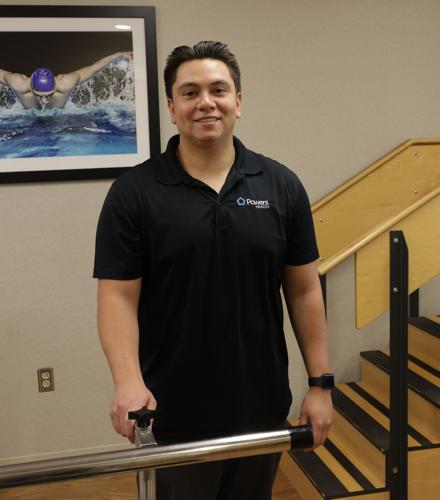
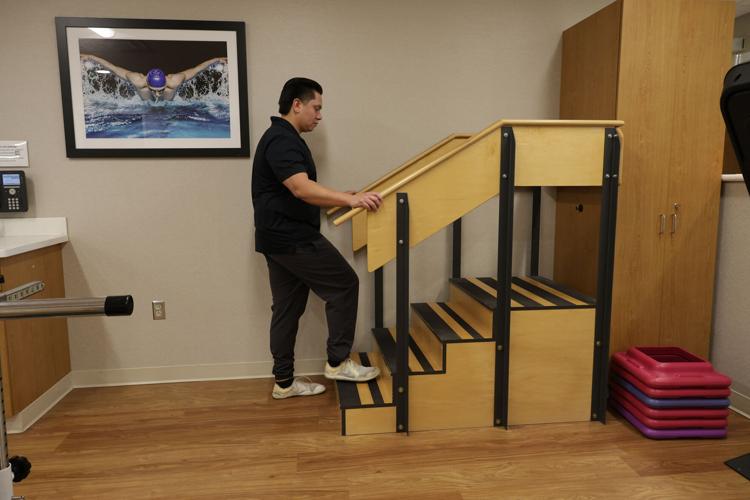
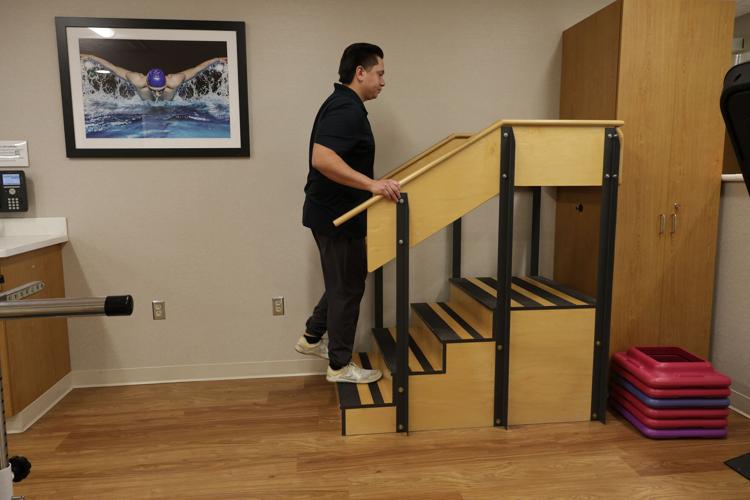
Carlos Gallegos, a physcial therapist at Community Hospital Fitness Pointe, dedmonstrates single-side exercises, which improve strenght on one side.
Tony V. Martin, The Times
For years, the idea of whole-body health and fitness has been fairly standard. But more fitness experts are extolling the benefits of single-side or unilateral exercise.
But though single-side exercise is aimed at isolating a single arm or leg for muscle strengthening, it is not meant to replace exercises that focus on the full body. Instead, it can be seen as a supplement to a regular exercise regimen with a very specific focus.
“The purpose of single-side exercise is to develop individualized strength and stability between extremities required for daily activities,” explains Carlos Gallegos, a physical therapist with Powers Health. “These exercises can reduce compensations, which happen when one side of the body performs more work during a specific task. For example, improving single-leg stability can help reduce fall risk and other injuries.”
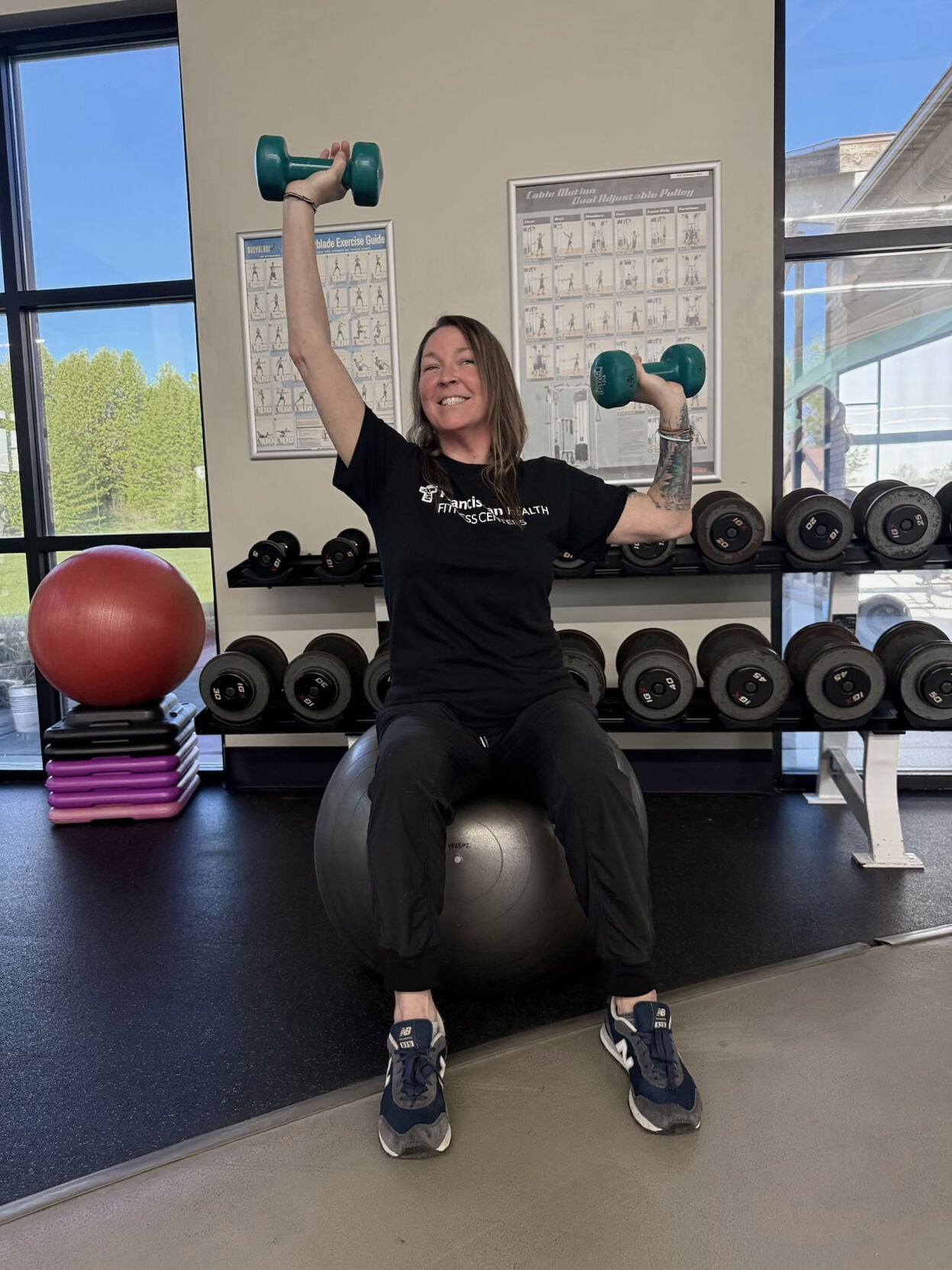
In other words, the goal is to teach one’s muscles and mind to operate "on their own” — to be sufficient without asking other muscle groups to take over, notes Carensa Bradford, a certified personal trainer at Franciscan Health Fitness Center. She says some benefits of single-side exercises can include improved stability, enhanced injury prevention, increased muscle activation and improved overall functional strength.
And whereas something such as a bench press typically is a gym-specific exercise, single-side exercises often more closely replicate activities that happen in real life. As such, they often provide benefits that extend into everyday activities, such as carrying something in one arm so you can open the door or planting one leg to create greater stability.
Rather than working against the notion of whole-body fitness, then, single-side exercise promotes better overall health and fitness.
“If we can train one side at a time, the ‘whole’ will be better, more balanced and stronger for it,” Bradford says.
Side steps
For those looking to add a single-side element to their workout, trainers Carlos Gallegos and Carensa Bradford recommend the following unilateral exercises. Gallegos says to start by dedicating one day per week, performing two sets of 10 repetitions for each exercise to challenge your stability and strength.
Step-ups
Start with your right foot on a step, then push with your right thigh to bring your left foot onto the step. To make this exercise more challenging, reduce your speed to cut momentum.
Single-leg balance
Find a sturdy surface, such as a counter, and place both hands on it for support. Lift one leg, then take your hands off of the counter. Try to hold the position for 10 seconds; as it becomes easier, increase the hold time.
Single-arm row
Place your right hand and right knee on a flat bench (your back should be straight and parallel to the floor). Extend your left leg behind you or to the side for balance, keeping foot flat on the floor (like a kickstand). Hold a free weight in your left hand, allowing the arm to hang straight down toward the floor for a full stretch of the lat muscle. Engage your core, maintain a neutral spine and elevate your chest slightly. Retract your shoulder blade. Pull the free weight up toward your hip (not your chest), keeping your elbow tight against your body through the lift. At the top of the lift, squeeze your back muscles and shoulder blade toward the spine. Slowly lower the weight to the starting position until your arm is fully extended, maintaining a controlled motion. Complete the desired repetitions on one side, then switch arms and legs to work the other side of the body.