


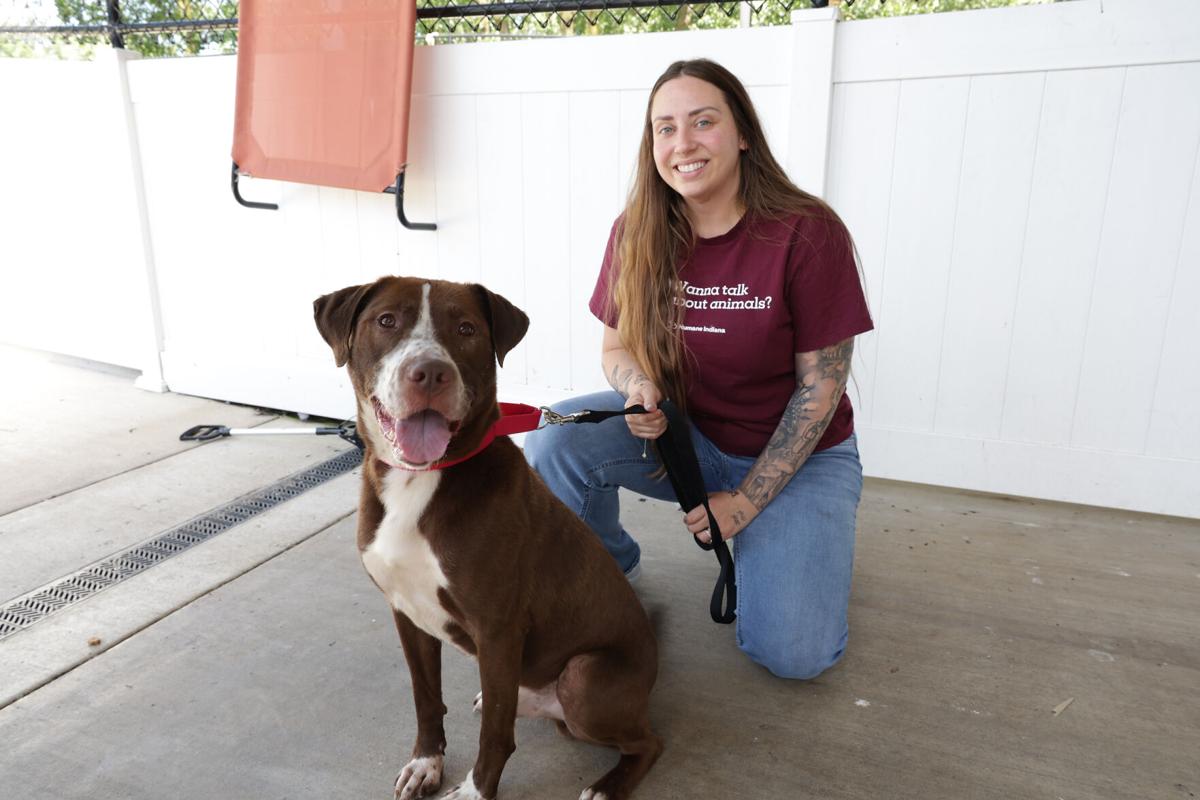
For a new pet, your home won’t feel like its home immediately.
The American Society for the Prevention of Cruelty to Animals calls it the 3-3-3 Rule in explaining why it can take a while for animal to adjust to new surroundings.
“The 3-3-3 rule is a catchy way we tell new pet owners/adopters to remember that it takes time for animals to adjust to new surroundings — 3 days, 3 weeks and 3 months,” said Jessica Greer, senior director of Shelter and Clinic Operations with Humane Indiana. “Typically, the first three days are the days it takes for a pet to decompress and realize they are someplace new. During these three days, it’s a ‘do nothing time.’ Just let the pet observe and take it all in. The next three weeks are when they start to learn the routine of the new place and when pet owners should begin training. Then the next three months, they are typically settled and bonded with their new people.”
People are also reading…
Greer notes that every pet is different so this rule is just a “starting point.”
Time and space
No matter how much love and attention you give a new pet, it can still be a difficult transition. And sometimes, too much affection can be scary for a pet in a new place.
“The first three days are for decompression. Transitioning from a shelter or adoption agency can often be overwhelming,” said Brody Hulen, head trainer at Foundation K9 Dog Training in Valparaiso. “Due to the dog’s inability to speak, there is no true measure for possible trauma or abuse a dog may have encountered. Being welcomed into a new home comes with a whole new world of sights, sounds and smells. Although for many of us this is the time we want to show our dog the love we have for them, this can often cause fear or unwanted pressure. Do not force affection. There will be plenty of time once the dog is comfortable. Often during the first three days, your dog may display fear of their surroundings and may only eat when alone if at all.”
Period of adjustment
After decompressing, your pet will start to feel more comfortable in their new surroundings. During this second phase, your pet will get accustomed to new routines. “Your dog will realize that the environment is predictable and safe. It is important to give them structure in their new home to give them the biggest opportunity for success,” said Hulen. “Having predictable bathroom and feeding schedules and routine exercise will all help to reduce anxiety. During this period, depending on the dog’s temperament, they may also push boundaries. We all have our own benefit and well-being as top priority and your new housemate does, as well.”
“It can be a frustrating time for new pet owners, but consistency is often the key to making these new routines stick. And it is not uncommon during this time that the dog may begin to display behaviors they weren’t comfortable enough to before. This can be a wide variety from counter surfing to escaping the boundary of the yard to explore the neighborhood.”
Advice for new pet owners
In the dark about what to do when that cute adopted creature comes home with you? Greer weighed in with some pointers: “My favorite advice for transitioning a new pet is to make a safe bubble for them for the first few days. For either a dog or a cat, this looks like a low traffic area of the home where ideally the pet can observe everyone else passing by with a mostly covered crate and lots of fun toys in there,” said Greer.
“We want to make this a den that the pet can retreat to when feeling unsure. Every time someone passes by the safe bubble, throw treats in the area for the new pet. This is the best way to help the pet feel like they are safe in their new space without overwhelming them. Most people find when they do this, the pet will venture out of the safe bubble sooner than later on their own to investigate and make friends with everyone.”
Establishing habits
There are some habits you’ll want to establish that you can start working on immediately. Which are most important?
“Create a safe bubble for decompression the first few days and potty training,” said Greer. “It’s important to work on potty training quickly. Always use positive reinforcement. This will actually teach the animal the right thing to do so they willingly want to make that decision over and over again. Give a treat every time you take your dog outside and they go potty. Take them outside often. For cats, potty training is much simpler and almost comes naturally to them. Usually, the first time they see the litterbox and are rewarded for using it, they will continue to do so. Feeding on a schedule also helps with potty training and helps give your pet predictability.”
Be patient
Some pets will feel at home quicker than expected. Others may take a while to warm up. With patience and persistence, you’ll fall into a rhythm where you connect well with your new best friend.
“The three-month mark is the beginning of confidence and deep bond building. This is when the dog’s true personality will be on full display and the bonds they have built will begin to be deep genuine bonds,” said Hulen.
Greer reminds pet owners that each pet moves at their own pace. “We love the 3-3-3 rule and advocate for it. Don’t be discouraged if your pet takes longer, though. It is not a guaranteed set number for every animal, and some animals are generally more shy than others,” she said.