





Marie Macke, executive director of Cancer Care Services for Powers Health, talks about the importance of early detection particularly through mammography, low-dose CT scans and colonoscopy.
Cancer can develop long before symptoms appear. Some types take hold quietly, with few noticeable clues until the disease has progressed. But new technologies offer the potential to find cancer sooner.
Still the fight against the disease starts with prevention, routine screenings and conversations with a primary care provider who knows a patient’s health history.
For Dr. Michael Hanak, a family physician with Rush University Medical Center, it’s that combination of emerging technology and everyday prevention that offers the greatest promise. Hanak played an integral role in implementing the Galleri multi-cancer early detection test (MCED) at Rush, offering patients a blood test that detects more than 50 types of cancer, often before symptoms appear.
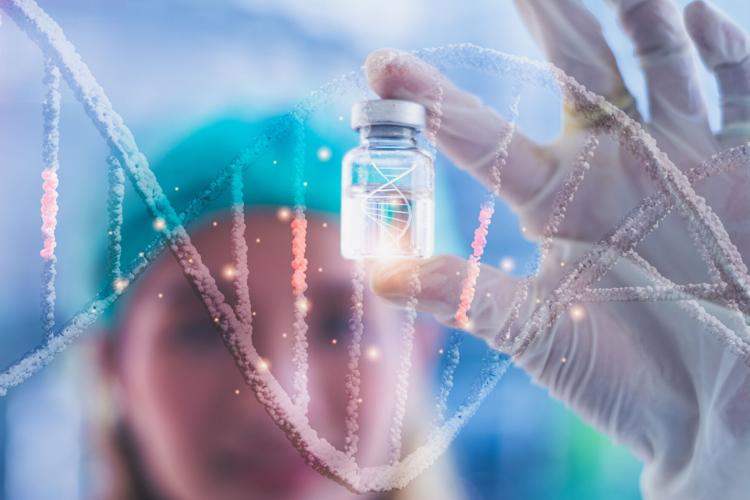
Dying cells release tiny fragments of DNA into the bloodstream. The technology, developed by GRAIL, a cutting-edge health-care company, combines advanced DNA sequencing with artificial intelligence to analyze these fragments and look for patterns that may indicate the presence of cancer.
People are also reading…
Though many insurance companies don’t cover the cost – which can range from around $600 to $700 – because the U.S. Food and Drug Administration has not formally approved the blood test yet, Hanak says he expects a decision by the agency in the coming months. An approval could open the door to broader insurance coverage.
“There are 55 different cancers it’s capable of detecting, but the degree of accuracy varies by cancer,” Hanak said. “It’s not as good at finding prostate cancer, but with pancreatic cancer, the tests have a really high sensitivity.”
Early detection is key with any cancer, but it’s critically important with pancreatic – with five-year survival rates reaching an estimated 44% to 80% when the cancer remains localized to the pancreas. Once it spreads, survival rates drop to 13% across all stages combined, according to the National Institutes of Health.
Researchers are also exploring several experimental vaccines that could help the immune system attack pancreatic cancer or potentially prevent the disease in people at elevated risk.
“Research is also underway on vaccines for infections such as Epstein–Barr virus that are linked to cancer, but these are not yet available for routine prevention,” said Dr. William Bae, a hematologist and oncologist with Franciscan Health Woodland Cancer Center in Michigan City.
Is cancer preventable?
Beyond experimental vaccines, established vaccines play an important role in preventing certain cancers, particularly those linked to viral infections.
“Vaccines have been most known to prevent and reduce the duration and intensity of infection, but they are also extremely effective in cancer prevention,” said Dr. Michael Tallarico, an oncologist/hematologist on staff at Powers Health hospitals. “The HPV vaccine prevents more than 90% of HPV-related cancers.”
The hepatitis B vaccine prevents infection with the hepatitis B virus, which can lead to liver disease, cirrhosis and liver cancer, he says.
“It is recommended for infants and adults and is 80% to 100% effective in preventing infection,” Tallarico said.
A report released this year by the World Health Organization and the International Agency for Research on Cancer estimated that more than 7 million new cases in 2022 were linked to preventable causes – lifestyle and environmental factors, among them.
“Smoking and asbestos exposure increase the risk of lung cancer; alcohol use is associated with oral cancers; excessive ultraviolet (UV) exposure can lead to skin cancer; and processed meats have been linked to colorectal cancer,” said Marie Macke, executive director of Cancer Care Services for Powers Health. “Education is critical because understanding these risks allows people to take proactive steps to protect their health.”
Yet the best approach to cancer prevention isn’t a single “cancer-fighting” food, says Dr. Kevin King, a radiation oncologist with City of Hope Cancer Center Chicago.
“It is a long-term dietary pattern centered on whole grains, beans, vegetables, fruit and other minimally processed foods, with limited processed meat, moderate or lower red-meat consumption and fewer sugar-sweetened and heavily processed products,” he said.
Eating well, quitting smoking, reducing alcohol consumption and staying active all play a role in reducing a person’s individual risk, King says.
“In large analyses, people at the highest activity levels had roughly 10% to 20% lower risk for several common cancers than those at the lowest levels,” he said. “For seven cancer types, the difference was at least 20%.”
While some cancers are strongly influenced by genes, Bae says most are not caused by a single inherited mutation.
“We cannot control every risk, and healthy choices cannot guarantee that someone will avoid cancer,” he said. “But prevention, vaccination and appropriate screening can meaningfully reduce risk or help find some cancers earlier.”
A second line of defense
Even when you take steps to reduce your cancer risk, a primary care provider can serve as a second line of defense, helping identify potential warning signs, recommend appropriate screenings and catch problems as early as possible.
“The primary care physician is one of the most important figures in a person’s health-care journey,” Macke said. “A PCP should serve as a constant presence throughout every stage of life, from periods of optimal health to times of illness and increased medical needs.”
Over time, a PCP develops a deep understanding of a patient’s health history, allowing them to recognize changes that may reflect normal development or signal early signs of a more serious concern that requires further evaluation, she says.
“Patients should feel comfortable discussing everything from minor concerns to sensitive or complex health issues, knowing they have a trusted advocate who understands their unique circumstances,” Macke said.
While annual checkups are often emphasized for children and older adults, routine preventive care can receive less attention in the intervening years, when busy adults may feel healthy enough to skip regular visits, Hanak says.
“It’s important to get a baseline in your early 20s, and you can have a conversation about what your risks are, especially if you have genetic risks,” he said. “There are more and more interventions becoming available based on a high-risk family history that you might not pursue if you didn’t have that interaction.”


