



Walking is probably one of the most accessible and least intensive methods of exercising, which is a blessing and a curse.
On the positive side, while distances and speeds may vary, most people can walk, making it a universally popular activity. Yet, this ease of entry can also be seen as a drawback for more seasoned athletes, who don’t necessarily consider walking to be “real” exercise despite its obvious cardiovascular benefits.
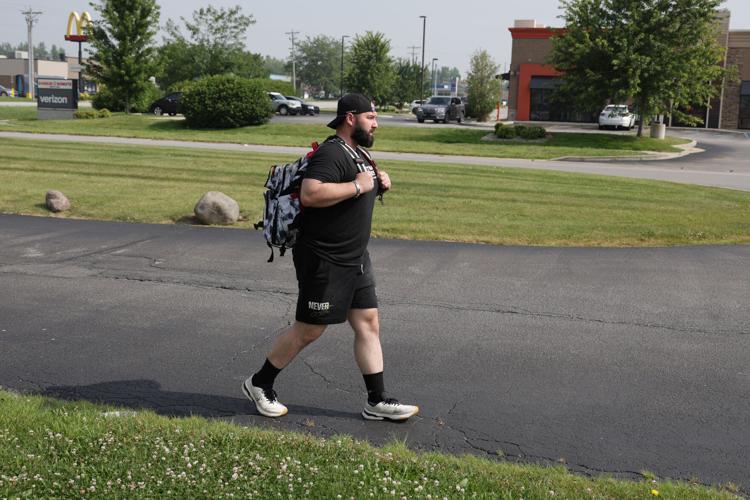
Such opinions have given rise to a widespread adoption of rucking, a common military training exercise that involves walking for a set distance with a weighted vest or backpack. The goal for civilian ruckers is to transform walking into more of a full-body workout that helps strengthen muscles while improving heart and blood functions.
People are also reading…
In other words, walking with weights, which seems pretty straightforward. Bob Kaczmarczyk says rucking can be a great way to add resistance to functional movement to build up strength and endurance. However, the owner of Heavy Metal Fitness in Highland doesn’t necessarily think it’s a good fit for all walkers.
“I would only recommend rucking for people who are already physically conditioned with regular resistance training in the weight room,” Kaczmarczyk explains. “If you haven’t already built muscle strength and ligament and tendon stability, rucking will more than likely add unnecessary strain to a deconditioned body, possibly leading to injury. I would say it’s better for those who need it in a professional setting like first responders or the military, where there are necessary and often life-saving requirements to functionally carry weighted gear in the field.”
For those non-professionals who do decide to give rucking a try, trainer Eric White recommends easing into it, in terms of weight and distance.
“Rucking can be a great way to improve cardiovascular fitness, build endurance and burn more calories than a regular walk while still being lower impact than running,” says White, a regional coach with Anytime Fitness in Winfield. “But the biggest mistake I see is people doing too much too soon. Start light, stay consistent and gradually increase the weight or distance over time.”
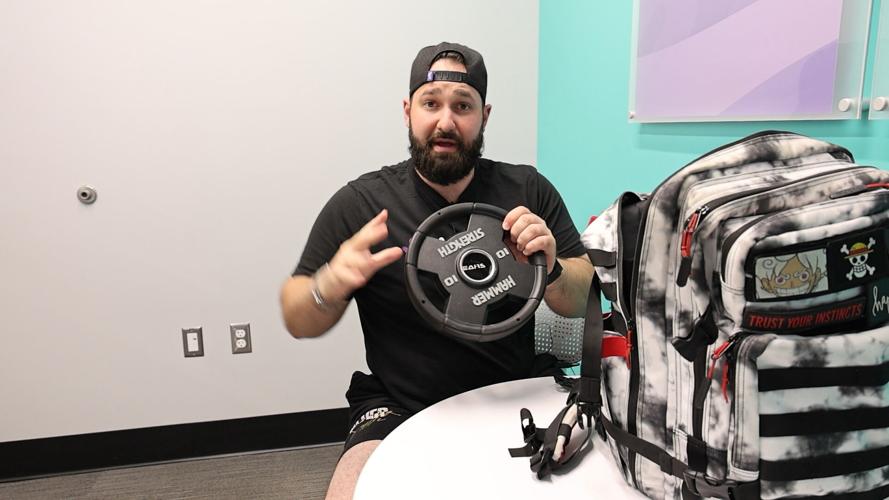
Among other things beginners should keep in mind, White recommends starting with 10 to 20 pounds of weight for 1 to 2 miles once or twice a week.
“(The weight) should feel challenging but still allow you to maintain good posture and a steady walking pace,” White notes.
As for rucking gear, a dedicated rucking pack is probably ideal, with Kaczmarczyk suggesting a weighted vest as the safest and most effective options for offering resistance distribution and center of gravity. But White notes that a regular backpack can work for rucking as well, with books, wrapped dumbbells or even sandbags as options to provide the weight.
The more important consideration for beginners, White says, is to monitor their technique and moderate their workouts to keep things as safe and as beneficial as possible.
“Stand tall, keep your core engaged and avoid leaning forward,” he advises. “Keep the weight high on your back and take controlled strides. And if your form starts to break down, it's probably time to lighten the load or call it a day.”


